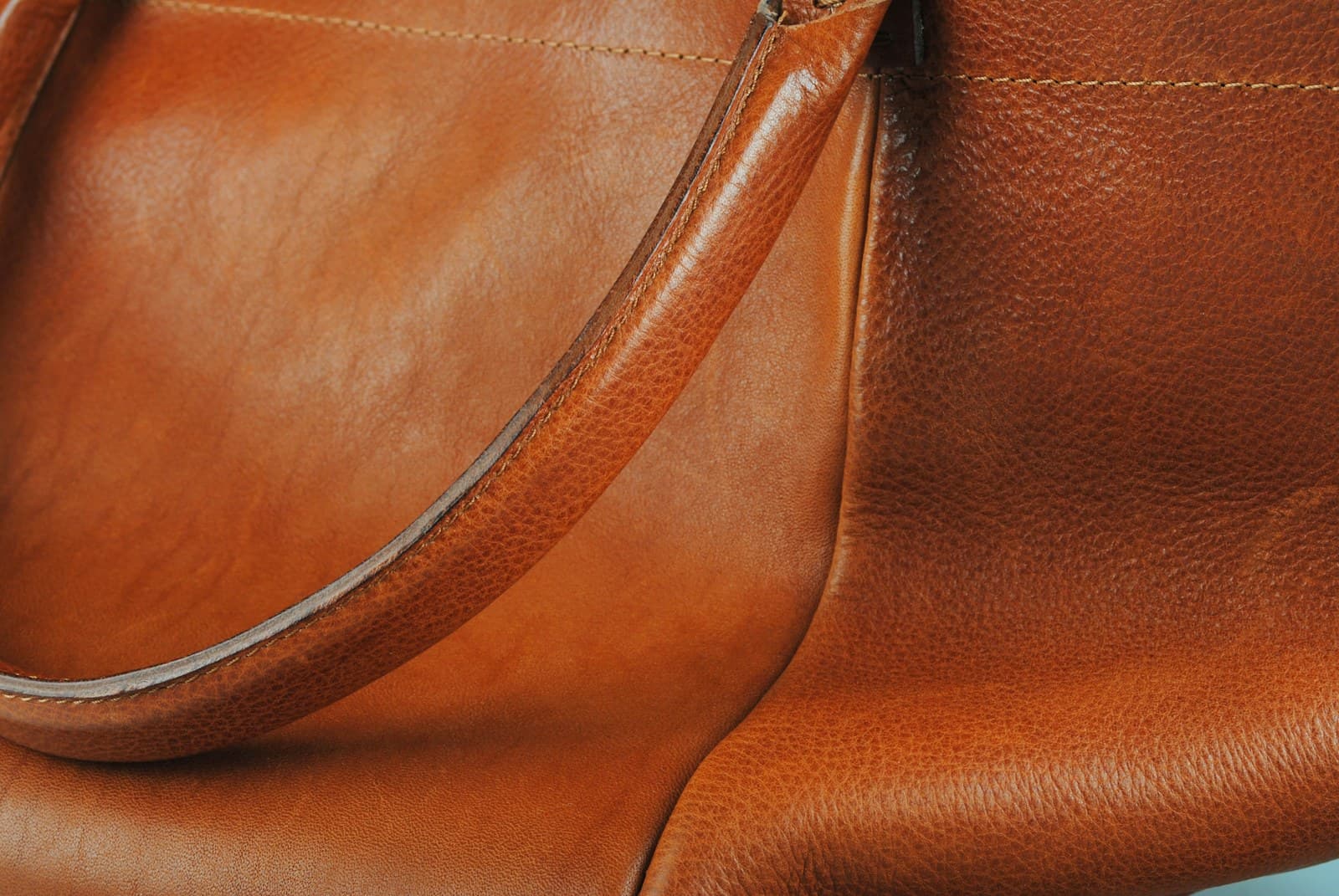
Mill
Vegetable-tanned leather, milled soft.
Longer in the drum, deeper in the structure. Mill falls heavy and soft, settles into quiet folds and takes on every movement. A leather that hangs rather than stands.
What it is
The same plant-tanned full-grain hide as Togo, milled considerably longer. The extended motion loosens the fibre bundle until the leather falls soft and the grain lifts into a deep, irregular structure.
How it is made
The milling is the real intervention. It takes several times as long as Togo and cannot be shortened: too little and the structure stays flat, too much and the leather loses its body. The point between the two is judged by hand, not by a clock.
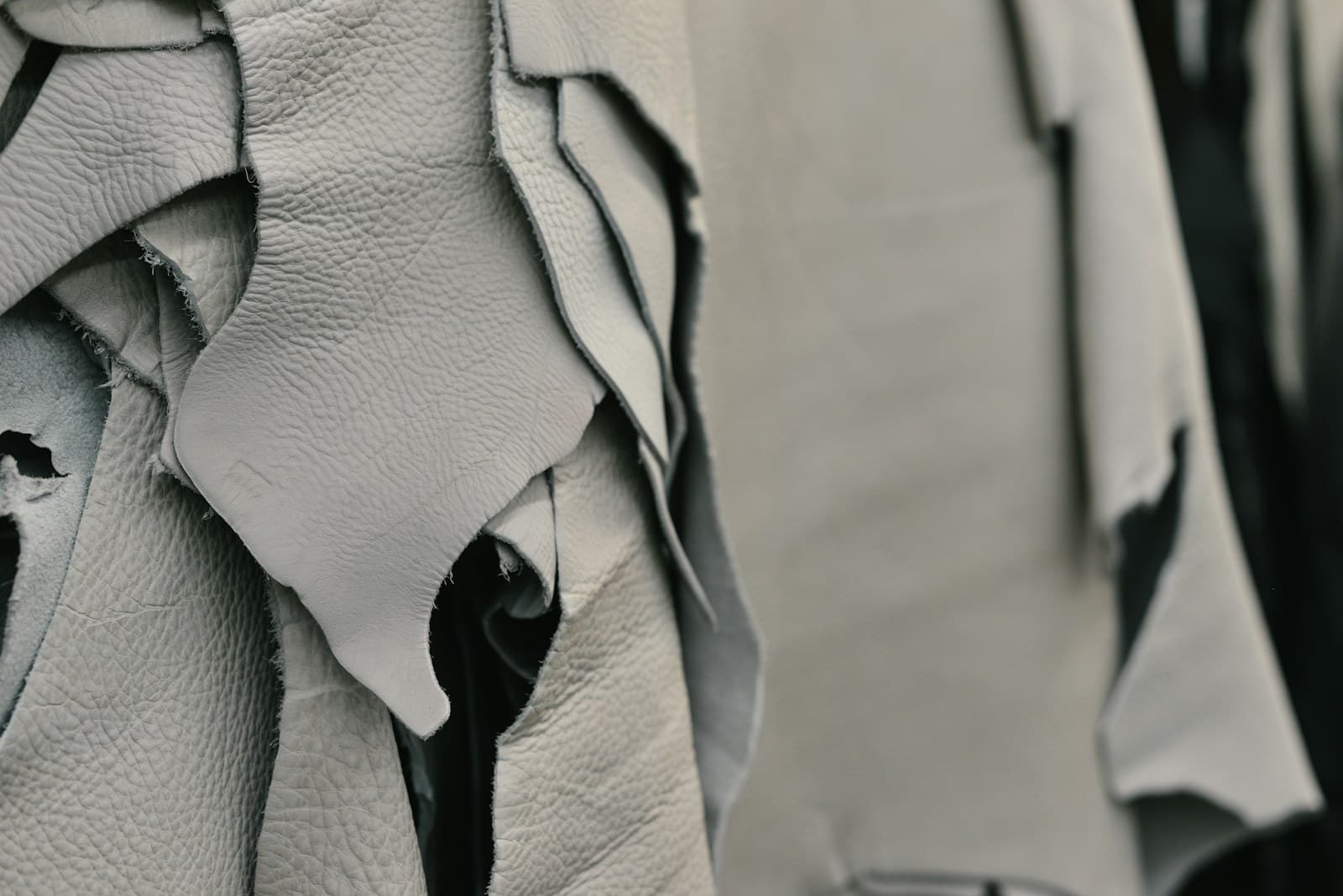
Data sheet
Typical per batch. Binding figures come with every delivery.
- Substance
- 1.4 - 1.6 mm
- Weight
- 1,000 g/m²
- Hand
- Heavy, soft, falling
- Scratch resistance
- Medium. Marks disappear into the structure
- Tannins
- Oak, Chestnut, Quebracho
- Finishing
- Long-milled, no surface coating
- In water
- Darkens temporarily, evens out as it dries
Honestly: vegetable-tanned leather darkens temporarily when it gets wet. That is not a fault but the consequence of an open fibre with no barrier coat. The colour evens out again as it dries.
How it ages
Vegetable-tanned leather changes more than chrome leather does, and it changes in one direction: darker, warmer, glossier wherever it is handled.
New
Open grain, pale tone, matte hand. The scent is at its strongest.
After one year
The first handled areas begin to shine. The tone has taken a step towards cognac.
After three years
Edges and corners are visibly darker. The leather is softer without losing its body.
After five years
A closed patina. Two pieces from the same batch no longer look alike.
The colour fields are an indication, not a photograph. A real ageing sample from the same hide comes with every sample set.
Crafted into
For pieces meant to fall rather than stand. The structure carries a large panel without reading as empty.