How to tell real vegetable-tanned full-grain leather
Five checks that need no lab access. Four of them work in a shop.
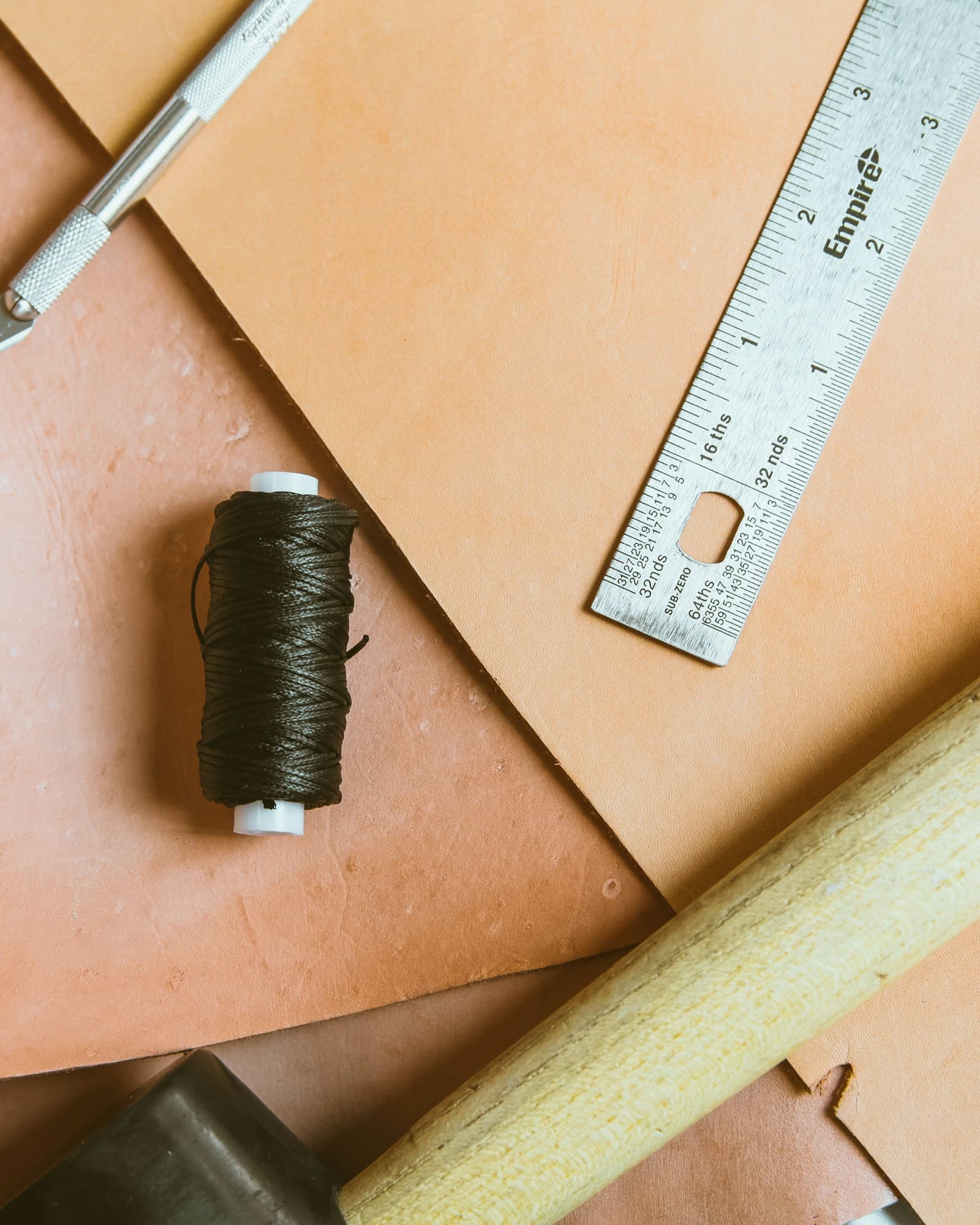
Dane Deaner / Unsplash
Labels say a great deal. Genuine leather, full leather, veg-tan, full-grain. The terms are only partly protected and are used accordingly generously. These checks need no laboratory.
The cut edge
Look at where the leather has been cut. A vegetable-tanned hide is beige to light brown in its core, the colour of the tannin. A chrome leather is blue-grey in the core, because that is what chromium salts look like. There is a reason the trade calls it wet blue.
Careful: if the edge is dyed or sealed it tells you nothing. Find an untreated spot, for instance at an inside seam.
The smell
Put your nose to it. Wood, tea, library: plant-tanned. Nothing, or sharp: probably not. Freshly tanned hides are far clearer on this than five-year-old ones.
The drop of water
A drop of water on an open, vegetable-tanned hide sinks in and leaves a dark spot that disappears again as it dries. On a pigmented surface it beads up. Strictly speaking this tests the finishing rather than the tannage, but in practice the two travel together.
The grain
Full-grain leather shows pores, and the pores are irregular. They cluster in places and open out in others, and there are scars, folds, veins. Corrected leather is sanded and embossed: the pattern repeats. If you find exactly the same pore twice, you are holding an embossing roller, not a hide.
The thumb
Press your thumb firmly into the surface. An open, plant-tanned hide lightens briefly under the pressure and then returns slowly. A sealed surface does none of this.
If you find exactly the same pore twice, you are holding an embossing roller, not a hide.
None of these checks proves anything on its own. Together they are quite hard to fake. And if a supplier would rather not show you an untreated cut edge, that is an answer in itself.