What patina is, and why plant-tanned leather ages better
Patina is not wear. It is a chemical change that can only happen on an open fibre.
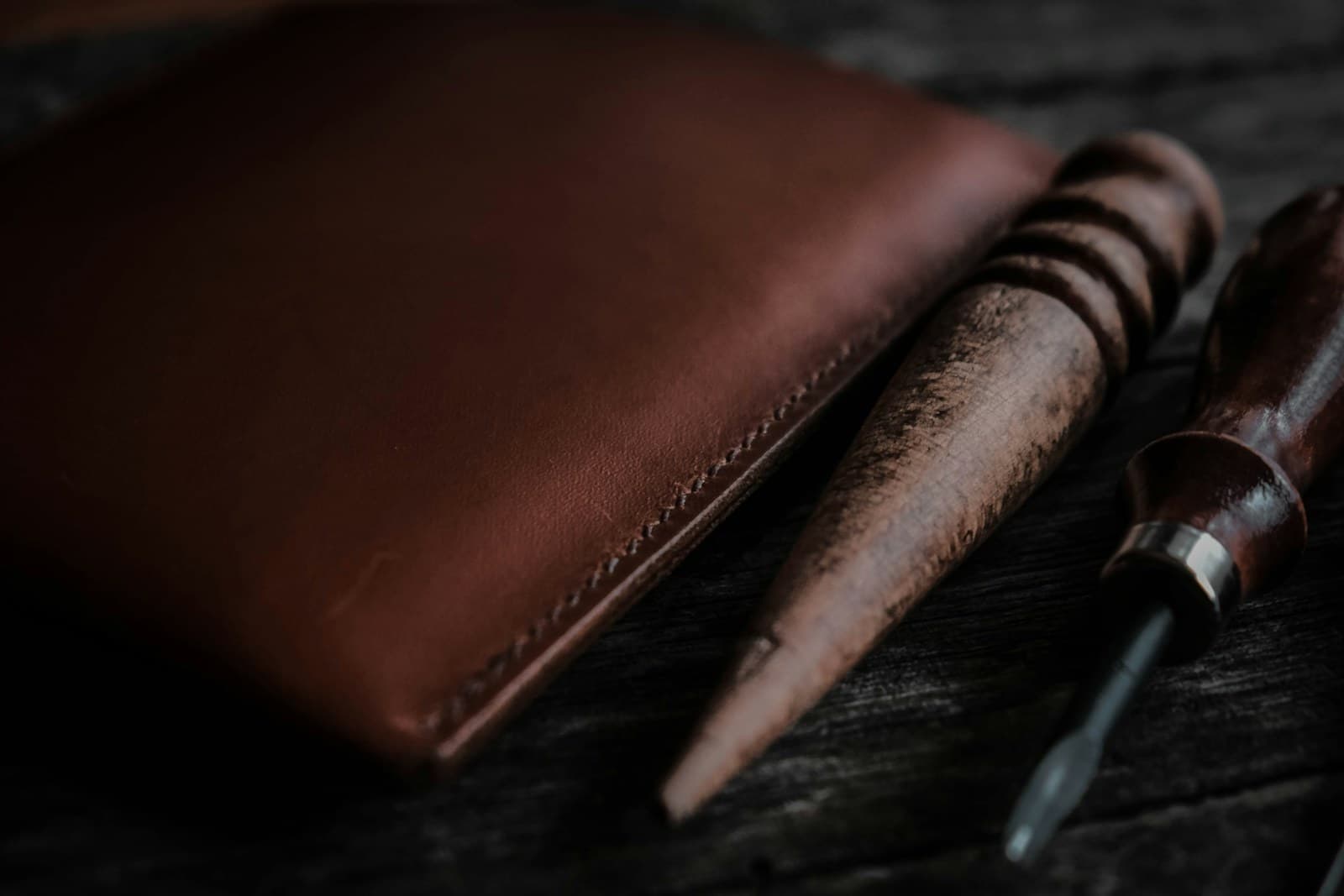
Alexander Kirov / Unsplash
Patina tends to get sold as a feeling. It is in fact a measurable process, and it is possible to say fairly precisely what happens.
Three things working at once
First, light. UV radiation oxidises the tannins in the fibre and they darken. That is why the inside of a bag is lighter than its outside after a few years. Second, oil: from the hand, from the air, from care products. It fills the fibre, makes the leather more translucent, and lets it shine where it is held. Third, mechanical pressure, which compacts and polishes the surface.
All three need access to the fibre. That is exactly why a pigmented chrome leather never develops a patina: it has a plastic layer over it. It does not get better, it gets worn out. That is the real difference.
Why this is not damage
A scratch on vegetable-tanned leather often disappears on its own if you run a finger over it: the displaced fibre stands back up with a little warmth and oil. What remains is not a wound but a trace.
It does not get better, it gets worn out. That is the real difference.
What you have to do for it
Very little. Use it, let it see light, condition it sparingly and occasionally. The most common mistake is too much oil too early: a leather saturated with balm on day one never gets the chance to develop a colour of its own. Wait until the leather asks.